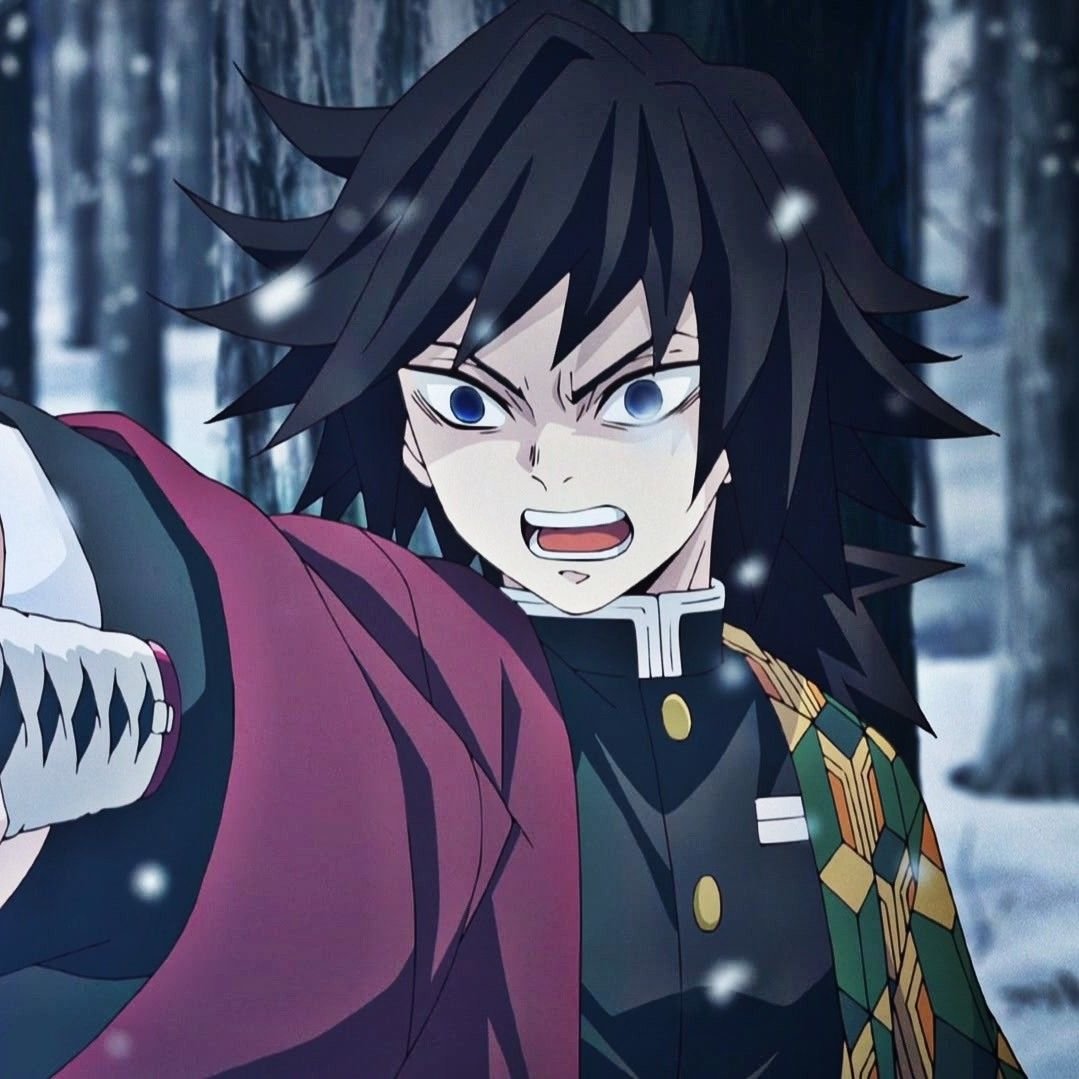
It's a question that sparks intense debate among fans across two legendary anime universes: Demon Slayer and Attack on Titan. Can the tranquil yet devastating power of Giyu Tomioka, the Water Hashira, truly be measured against the strategic genius and indomitable will of Erwin Smith, the Commander of the Survey Corps? While both characters embody incredible strength and leadership, their very definitions of "battle" and "strength" diverge dramatically. This flagship guide isn't about declaring a simple winner; it's about dissecting their unique arsenals, mindsets, and the contexts that forge their power.
We're diving deep into a cross-universal thought experiment, exploring what happens when a master of individual combat meets a master of strategic warfare.
Giyu Tomioka: The Unyielding Blade of the Demon Slayer Corps
In the world of Demon Slayer, Giyu Tomioka is a force of nature. As the current Water Hashira, he stands among the elite swordsmen tasked with eradicating demons, a role demanding unparalleled physical prowess, tactical adaptability, and unwavering resolve. Giyu's combat style is a fluid dance of defense and offense, characterized by the Water Breathing technique, passed down through generations.
His skills aren't just about raw power; they are about precision, foresight, and an almost preternatural calm in the face of overwhelming danger. This serenity allows him to create the unique Eleventh Form of Water Breathing, "Dead Calm," a technique that repels all attacks within its radius. To truly appreciate the nuances of his unique style, consider exploring .
Giyu's strength isn't just theoretical; it's proven in the most brutal of battles. He has faced formidable Upper Rank Demons, holding his own against Akaza, one of Muzan's strongest lieutenants, and even participating in the final confrontation against Muzan himself. Such encounters demand not just skill but immense resilience and a profound understanding of his own abilities and limitations. For a detailed account of this epic clash, you might be interested in .
The context of Giyu's training under Sakonji Urokodaki, a former Water Hashira renowned for his long life and wisdom, further underscores the depth of his combat lineage. This rigorous background, shared by all Hashira, is crucial to understanding their capabilities. To grasp the foundations of this power, we recommend learning more about .
Giyu's Standing Among His Peers
The Demon Slayer Corps boasts an array of incredibly diverse and powerful Hashira, each bringing a unique combat style and personality to the fight against demons. From Shinobu Kocho's lethal wisteria poison to Mitsuri Kanroji's superhuman strength and flexible blade, or Sanemi Shinazugawa's raw, unbridled fury, the Hashira represent the pinnacle of human capability in their world. Giyu, despite his quiet demeanor, is consistently ranked among the most powerful, capable of taking on the most dangerous threats.
Understanding the collective strength and specialized talents of Giyu's fellow Hashira illuminates the high bar he meets. You can gain further insight by examining . Their varied approaches, from Obanai Iguro's precise Snake Breathing to Tengen Uzui's explosive shinobi techniques, highlight the broad spectrum of combat expertise within the Corps. To truly weigh Giyu’s individual combat merit, it’s essential to consider and also delve into .
While Giyu's physical strength and swordsmanship are undeniable, his quiet resolve and stoic nature also play a significant role in his combat effectiveness, allowing him to maintain focus under extreme pressure. For those who wish to understand the inner workings of this reserved warrior, .
Erwin Smith: The Architect of Hope and Despair
In stark contrast to Giyu's frontline combat role, Erwin Smith's strength lies not in the swing of a blade but in the might of his mind. Commander of the Survey Corps, Erwin operates on a grander, strategic scale, orchestrating humanity's desperate fight against the colossal Titans. His battles are fought with formations, calculated risks, and the manipulation of human resolve, rather than individual sword techniques.
Erwin's genius is his ability to inspire unwavering loyalty and drive his soldiers forward, even into the jaws of certain death, all for the greater good of humanity. His mind is a weapon far more potent than any blade, capable of predicting enemy movements, devising audacious plans, and turning seemingly insurmountable odds into opportunities. His strategic brilliance is so pivotal to his character that you’ll want to immerse yourself in .
Unlike Giyu, who directly confronts demons, Erwin primarily directs the fight. He is a brilliant strategist, making life-or-death decisions from horseback, often sacrificing personal safety and the lives of his comrades to achieve a larger objective. His most iconic moments involve outsmarting enemies through sheer willpower and tactical foresight. To understand the depth of his tactical acumen, particularly against the most formidable threats, consider .
Erwin's impact on his world is measured by his unwavering commitment to his ideals and the sacrifices he made, which resonated deeply with his soldiers and shaped the destiny of humanity. For a look at the enduring legacy of his conviction, check out .
Defining "Stronger In Battle": A Cross-Universal Conundrum
Comparing Giyu Tomioka and Erwin Smith directly in a "battle" is challenging because their definitions of "battle" are so different.
- Giyu's Battle: A fast-paced, high-stakes duel, where individual skill, physical attributes, and specialized techniques determine victory or defeat against a supernatural, regenerating foe. His strength is direct, immediate, and personal.
- Erwin's Battle: A large-scale engagement involving hundreds of lives, where strategic planning, logistics, psychology, and the ability to command and motivate are paramount. His strength is indirect, systemic, and collective.
If we envision a hypothetical one-on-one duel with traditional combat rules, Giyu's superior swordsmanship, superhuman speed, and unique breathing techniques would undeniably give him the advantage. He is built for individual combat against terrifying creatures. However, this scenario doesn't leverage Erwin's true "strength."
Conversely, if the "battle" is a large-scale war requiring strategic command, managing resources, and inspiring an army against overwhelming odds, Erwin would excel. His ability to devise complex strategies and lead troops through impossible situations is unparalleled in his universe. In such a scenario, Giyu, while a formidable warrior, is not a commander. His strength lies in executing, not orchestrating.
This comparison highlights that "strength" isn't a monolithic concept. It's multi-faceted, adapting to the specific challenges and environments an individual faces. For those eager to understand the fine distinctions in Giyu's combat profile, you can find out more by . Furthermore, for a broader perspective on leadership beyond direct combat, you might also find it enlightening to explore .
The Unseen Battle: Impact and Legacy
Ultimately, both Giyu Tomioka and Erwin Smith are incredibly "strong" figures within their respective narratives, but they operate on entirely different planes of influence and action. Giyu's strength is the exquisite precision of his blade, severing the threads of demonic terror one by one. Erwin's strength is the grand, terrifying vision of his mind, uniting humanity against a seemingly insurmountable threat, even at the cost of countless lives, including his own.
The question isn't whether one can physically overpower the other, but rather which form of strength is more "powerful" in its intended context. Both succeeded in pushing humanity forward against existential threats, using the tools and talents unique to their roles. Their legacies are defined by their unwavering commitment and the profound impact they had on their worlds.
So, is Giyu Tomioka stronger than Erwin Smith in battle? If "battle" means a direct, physical confrontation, Giyu likely holds the edge. If "battle" means commanding an army and orchestrating complex strategic maneuvers, Erwin's genius would reign supreme. Instead of a simple yes or no, the more enriching conclusion is that both represent the pinnacle of different kinds of strength, each essential and awe-inspiring in its own right.